

10.02.26
Interview with Roman Schläpfer: Between norms and everyday life – hygiene is decided in the workplace
Hygiene in hospitals is not just a matter of paperwork, but rather the interplay of planning, technology and operation. If these perspectives are not brought together at an early stage, the resulting solutions may comply with standards but are unnecessarily complex or difficult to operate on a daily basis.
In this interview, we talk to Roman Schläpfer, a specialist in healthcare construction, cleanroom technology and complex construction projects. The building engineer, who has further training in SME management and business administration, has been involved in the general planning of cleanrooms and laboratories since 2008. As president of SwissCCS and a member of the VDI Technical Committee for Cleanroom Technology and the German Society for Hospital Hygiene, he is involved in developing standards and guidelines. He supports building owners from strategy to implementation – with a focus on quality, sustainability and resilient hygiene solutions.
If you had to explain your work in one sentence, what would it be?
I combine technical, hygienic and organisational perspectives to develop practical, technically sound solutions to complex construction and operational issues in the healthcare sector. Structured communication between planning, operations, authorities and users is crucial to ensure that all parties involved work towards a clearly defined common goal.
Standardisation vs. individuality: where healthcare construction is currently stuck
When you look at construction and operational projects in the healthcare sector today, in which areas do you currently see the greatest need for discussion?
The greatest need for discussion currently lies in the lack of structural standardisation in healthcare construction in Switzerland. Although there are over 250 hospitals, practically every project starts again from scratch when it comes to fundamental issues. This applies, for example, to space concepts for patient rooms, functional zoning, minimum technical requirements, hygiene-related equipment and operational processes. From a planning perspective, individuality is often equated with quality. In reality, this approach often leads to prolonged planning phases, recurring fundamental discussions, increased costs and unnecessary complexity in operation. At the same time, it is clear that hospitals can never be completely identical due to medical specialisations, regional care mandates and existing infrastructures. The need for action lies in establishing defined basic standards for recurring functions. These include, for example, modular room concepts, standardised minimum hygiene requirements, defined interfaces between construction, technology and operation, and clear requirements on the part of the client. Individuality should be targeted where it brings real added value in medical or operational terms. Without this step, knowledge will continue to be rebuilt in each project instead of being systematically developed. In the long term, this slows down innovation, makes comparability more difficult and prevents efficiency gains across the entire healthcare system.
Are there any topics where you notice that planning, operations and hygiene often seem to be at odds with each other?
Yes. This is particularly evident in areas where technical functionality, hygienic safety and everyday operational suitability must all be fulfilled simultaneously. Classic examples include ventilation concepts, water installations, surface materials, room pressure concepts and the cleanability of components and facilities. Planning often focuses on standards, technical parameters and certifications. Operations focuses on processes, human resources and everyday suitability. Hygiene thinks in terms of risk potential, transmission routes and patient safety. If these perspectives are not brought together at an early stage, the result is solutions that are technically correct but difficult to manage in operation or unnecessarily complex from a hygiene point of view. A typical example is highly complex technical systems that are theoretically designed to create optimal hygienic conditions but are prone to errors in operation or cannot be operated consistently as planned. In such cases, a false sense of security arises because the system works on paper but is not operated stably in everyday use. Another area is the definition of requirements in early project phases. If the client’s requirements are not clearly, measurably and jointly agreed upon, each discipline will interpret them differently. This leads to conflicting goals, addenda and operational compromises later on. The core of the problem rarely lies in a lack of expertise, but rather in different ways of thinking. Planning optimises systems, operations optimise processes, and hygiene optimises risk minimisation. Successful projects manage to bring these three levels together in a structured manner at an early stage and to openly address conflicting goals before construction begins.
Where do most hygiene risks arise: in planning, construction or operation, and why?
Most real hygiene risks arise during operation, particularly in the direct interaction between staff, patients and infrastructure. Technology can reduce risks, but hygiene is determined in everyday life by behaviour, work processes and actual usage.
Where do you experience the greatest friction between “standard-compliant” and “practicable” in projects?
The greatest friction arises where standards theoretically represent maximum safety, but operations require permanently stable and manageable solutions. This is particularly evident in technical systems, the cleanability of components and functional processes in everyday use. Standards often represent an ideal situation. In practice, these requirements come up against existing buildings, limited space, budget constraints and human resources. This results in solutions that comply with standards but are difficult to implement in everyday life or are prone to errors.
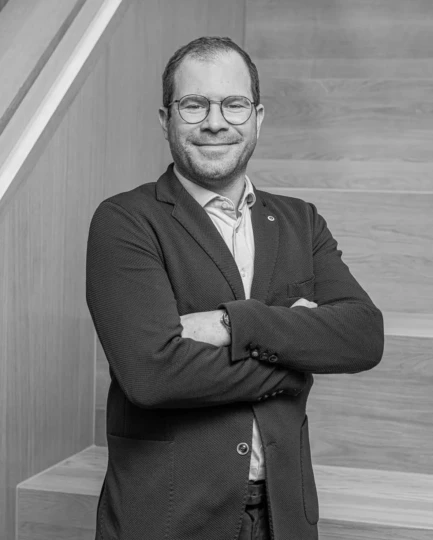
Roman Schläpfer
Education: Building services engineering; further training in SME management (HSG) and business administration
Currently: Executive Management/Board of Directors & Project Management at ewah AG; President of SwissCCS
network of experts: hygieneforum.ch/hygiene-experten/
Ventilation: benefits, risks, responsibility
You criticise the ill-considered addition of substances to ventilation systems in healthcare facilities. What specific problem are substances added to ventilation systems actually supposed to solve?
Fabric additives are primarily intended to reduce microbiological contamination in air systems, neutralise odours or subjectively increase the feeling of safety and cleanliness. Some also argue that this provides additional disinfection of surfaces or indoor air. The fundamental problem to be addressed is usually not the ventilation itself, but uncertainty in dealing with infection risks, especially in the case of airborne pathogens.
Where do you see the greatest risks of such procedures, particularly with regard to side effects, long-term consequences and liability in the event of damage?
The greatest risks lie in three areas.
Firstly, side effects. Substances can react with materials, surfaces, medical products or other chemical substances. Furthermore, the long-term effects on the health of patients and staff have often not been sufficiently investigated.
Secondly, long-term effects. Many procedures are evaluated on the basis of short-term studies or laboratory conditions. The real effects of continuous operation over many years are often unclear, especially in the case of low continuous exposure.
Thirdly, responsibility. When damage occurs, it is often unclear whether the planner, operator, manufacturer or user is responsible. As soon as additional substances are actively introduced, one leaves the realm of classic ventilation technology and moves towards medical and hygienic intervention.
This whole topic is related to healing architecture. Are you not a fan of developments in this area?
Healing architecture is fundamentally beneficial as long as it focuses on demonstrable effects. These include daylight, orientation, acoustics, stress reduction, material quality and quality of stay for patients and staff. It becomes critical when measures are justified on the basis of health effects without clear evidence. Architecture can support healing, but it cannot replace basic medical or hygienic principles. The risk arises when design or marketing-driven approaches are presented as equivalent to technical or hygienic protective measures.
What is particularly important when choosing the right ventilation system? Especially in sensitive areas such as an operating theatre or an isolation room?
Risk analysis, usage profile and operational stability are crucial. In highly sensitive areas, the focus is not on maximum technical complexity, but on stable, traceable and maintainable systems. Air flow, pressure concepts, filter stages, redundancies and monitorability must be suited to real-world operation. In operating theatres, controlled air flow, particle control, stable pressure conditions and reliability are key. In isolation rooms, clear pressure concepts, safe air flow, defined airlock functions and easy monitorability are crucial. The most important principle is robustness. A system must function continuously under real operating conditions, not just under ideal conditions on paper.
Three immediate measures to prevent hygiene traps in everyday life
If you could recommend three immediate measures to a hospital/facility manager to avoid hygiene traps, what would they be?
Define clear responsibilities and processes for hygiene-related facilities1. Define clear responsibilities and processes for hygiene-related facilities
Responsibilities, inspection intervals, escalation procedures and decision-making powers must be clearly defined for water, ventilation and critical infrastructure. Many risks arise not from technology, but from a lack of clarity about who needs to respond and when.
Place greater emphasis on operations than on planning2. Place greater emphasis on operations than on planning
Regular system reviews, structured audits, realistic maintenance strategies and training of operating personnel are essential. Systems must be operated as planned. Deviations, temporary solutions and creeping system changes are common causes of hygiene risks.
Early interdisciplinary coordination in the event of changes to the portfolio3. Early interdisciplinary coordination in the event of changes to the portfolio
Any structural, technical or organisational change should be evaluated jointly from an operational, technical and hygiene perspective. Many problems arise from individual decisions that do not take the system as a whole into account.
Anzahl Likes:0
Share post
Knowledge articles from this category


Our platform partners share their knowledge and high-quality products on Hygieneforum.ch - we introduce our platform partners.
To the partnerships
Emergency
Hygiene emergency
Emergency
Hygiene emergency