

08.04.26
The role of hygiene standards: An expert discussion with the SNV
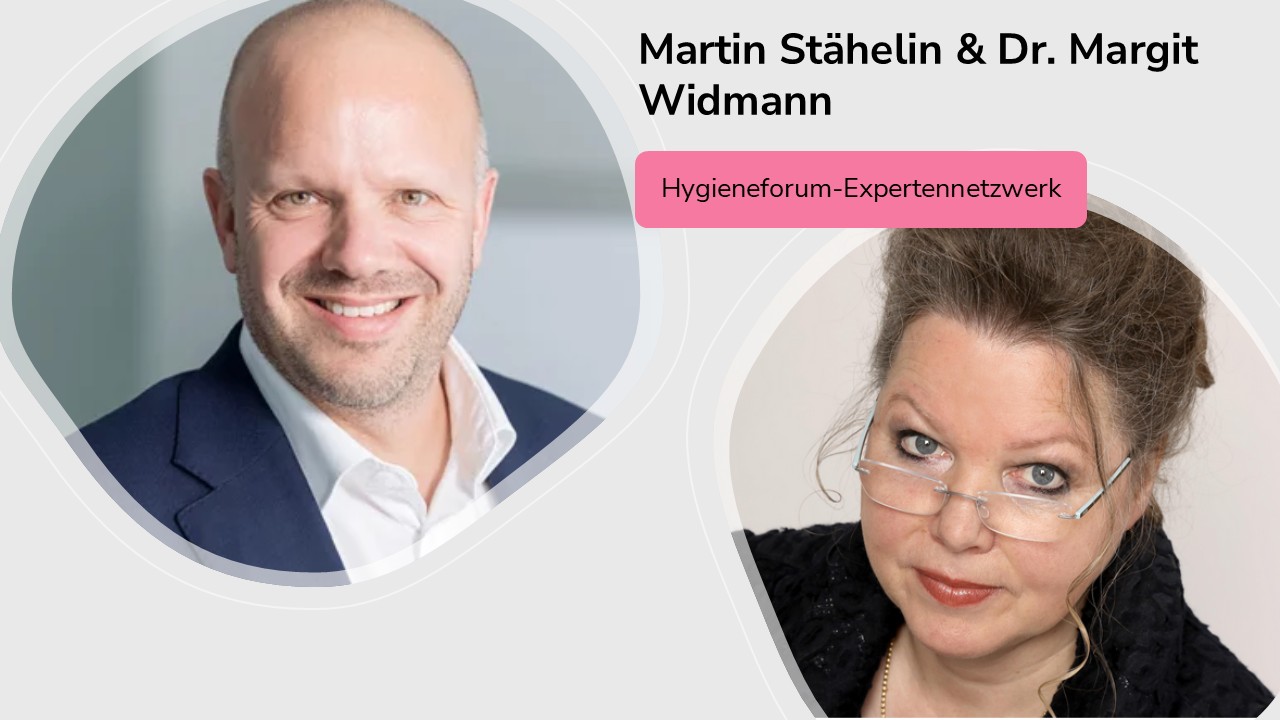
Standards often operate behind the scenes, yet they are indispensable when it comes to safety, quality and reliable processes. In the field of hygiene in particular, they help to define requirements and reflect the current state of the art. For this expert discussion, Martin Stähelin from the Swiss Standards Association (SNV), Head of the SNV Academy and responsible for marketing, communication and membership, and Dr Margit Widmann, specialist consultant at the SNV Academy, answered questions on the significance, benefits and limitations of standards. Martin Stähelin is also a member of the Hygiene Forum’s expert network.
Understanding and classifying standards
Mr Stähelin, what exactly is a standard?
Standards are voluntary rules drawn up by experts that apply to virtually every aspect of modern economic and everyday life. You encounter them constantly in your daily life – often without even realising it. Even before you arrive at work in the morning, numerous standards help to make your daily life safer and more comfortable. They enable the smooth interaction of a wide variety of products, processes and services, thereby supporting everyday life in many different ways.
Who is the Swiss Standards Association (SNV) and what exactly does it do?
Response from Martin Stähelin, Head of the SNV Academy and responsible for marketing, communications and membership at the SNV
The SNV represents Switzerland in European (CEN) and international (ISO) standardisation, acting in the interests of business and society. It coordinates and publishes standards in Switzerland, organises standardisation processes, supports businesses through consultancy and training, and ensures that Swiss expertise is incorporated into international standards.
You head up the SNV Academy and are responsible for marketing, communications and membership management. How did you come to take on this role, and what inspires you about working with standards?
Response from Martin Stähelin, Head of the SNV Academy and responsible for marketing, communications and membership at the SNV
I took over as head of the SNV Academy at the end of 2022. Through more than 100 practical seminars, webinars, e-learning courses and in-house training sessions, we provide targeted expertise on standards and standardisation processes.
Following a change in leadership in 2025, I was also given responsibility for our marketing and communications department, as well as for the membership division. My aim is to combine the strengths of these three areas in such a way that the SNV and the benefits of standardisation are recognised even more widely within the Swiss market and society.
At first glance, standardisation may seem dry, but it is anything but rigid – it is a living process. Thanks to its innovative strength, Switzerland ranks among the world’s leading nations, and it is precisely this innovative strength that enables us to play an active role in shaping standards, contributing to them at an international level and thus securing a clear competitive advantage.
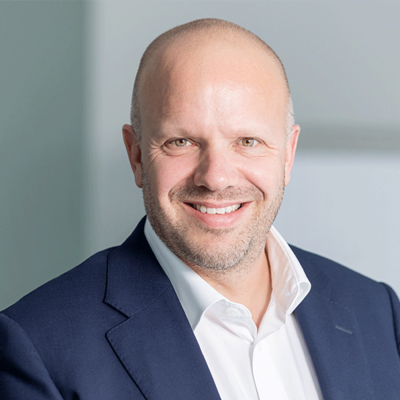
Martin Stähelin has been head of the SNV Academy since 2022 and, since May 2025, has also been responsible for marketing, communications and membership management. As a graduate in Business Economics (FH) with a Master of Advanced Studies (MAS) in Human Capital Management (ZHAW), he combines specialist knowledge with an understanding of people and education. His aim is to communicate standards in a way that is understandable, practical and relevant – whilst at the same time raising awareness of their importance and the appeal of participating in standardisation.
Network of experts: hygieneforum.ch/hygiene-experten/
Standards in hygiene practice
If a Swiss hospital or doctor’s surgery wants to ensure that it maintains ‘state-of-the-art’ hygiene standards – how do standards help it to go beyond the legal minimum?
Response from Dr Margit Widmann, Subject Specialist at the SNV Academy
Firstly, an important clarification regarding the term ‘state-of-the-art’: Swiss medical device law requires more than simply the ‘state of the art’. Article 72(1) of the Medical Devices Ordinance (MepV) explicitly requires reprocessing ‘in accordance with the state of the art in science and technology’. Furthermore, Article 72(2) requires procedures that are ‘validated in accordance with the state of science and technology’. This is the highest level of requirement in legal terms – it encompasses not only best practice but also the incorporation of the latest scientific findings.
Standards play a central, clearly defined role in this context: in accordance with EN ISO 14971:2019, they reflect the ‘state of the art’ – that is, generally accepted good practice in technology and medicine. Standards such as SN EN ISO 13485 (quality management systems), SN EN ISO 15883 (cleaning and disinfection equipment), SN EN ISO 17665 (steam sterilisation) or SN EN 556 (sterility requirements) specify this state of the art. Formally, they are not laws, but they are regarded as recognised rules of technology. Those who comply with them can demonstrate that they have acted to the best of their knowledge. Those who ignore them bear the burden of proof regarding the equivalence of their own solution.
However – and this is crucial – standards alone are not enough. They are revised periodically and therefore always reflect the current state of knowledge. New scientific findings are only incorporated after a delay. That is why Swissmedic has created supplementary tools: The ‘Good Practices’ (GPA for reprocessing, GPAE for flexible endoscopes, GPI 2025 for maintenance) specify the current state of the art and are updated more frequently than standards. Section 71(4) of the Medical Devices Ordinance (MepV) expressly states that these Swissmedic guidelines are to be regarded as the ‘state of the art in science and technology’.
Swissmedic’s 2024 Annual Report on Hospital Inspections has once again shown that many facilities lack an effective quality management system and have significant shortcomings in reprocessing, maintenance and vigilance. Monitoring is being stepped up.
Standards therefore help in two ways: firstly, they provide a structured, evidence-based framework – from spatial planning and validation processes to staff qualifications. Secondly, they ensure transparency and comparability for patients, insurance companies and regulatory authorities. An institution that genuinely wishes to achieve the ‘state of the art’ required by law regards standards as a starting point and, in addition, follows the latest Swissmedic guidelines, specialist publications and scientific developments.
Where and how can I quickly find out which standards apply to my area (e.g. sterile goods reprocessing, cleanrooms, surface disinfection)?
Response from Dr Margit Widmann, Subject Specialist at the SNV Academy
As the SNV, we are the central point of contact for all enquiries relating to standards in Switzerland. We recommend a systematic approach across multiple channels:
- The SNV as the standards centre: As a member of ISO and CEN, the SNV is the Swiss hub for all SN, EN and ISO standards. Standards can be searched for and purchased via our online shop SNV-Connect. We offer collections organised by subject – for example in the fields of medical technology, sterilisation and disinfection – as well as training courses via our SNV Academy. For organisations with extensive standards requirements, our standards management service is also available, ensuring that the standards collection remains up to date at all times.
- Swissmedic guidelines as a guide: For hospitals and clinics, the ‘Good Practices’ (GPA, GPAE, GPI) published by Swissmedic, along with the accompanying information sheets and checklists, provide an excellent starting point. These documents each refer to the relevant standards – whether SN EN ISO 15883 for cleaning/disinfection, SN EN ISO 17665 for steam sterilisation or SN EN 868-8 for sterile containers. Swissmedic’s inspection checklists are publicly available and provide a concise overview of which standards are required in which areas.
- Professional associations as knowledge partners: The SGSV (Sterile Supply), SGSH (Hospital Hygiene), IG WiG (Reprocessing in Healthcare) and fibs (Infection Prevention) are indispensable specialist resources. They have contributed to Swissmedic’s ‘Good Practices’, offer continuing professional development and provide information on changes to standards.
- Cantonal authorities for medical practices: Outpatient facilities that are not directly inspected by Swissmedic are subject to the supervision of the cantonal health authorities (cantonal pharmacists). These authorities are increasingly aligning themselves with Swissmedic’s guidelines. The KIGAP guidelines (Good Practice for Reprocessing in Medical and Dental Practices) are a useful reference document.
Our tip: Start by consulting the Swissmedic checklists for the relevant area to identify the relevant references to standards, and then obtain the standards via the SNV. This ensures that you are always working with the latest versions.
The pandemic has shown just how rapidly knowledge of hygiene is evolving. How quickly can standards actually respond to new findings – and how can hygiene experts themselves help shape them?
Response from Dr Margit Widmann, Subject Specialist at the SNV Academy
Standards reflect the current state of the art, but cannot always keep pace with the ‘state of science and technology’, as traditional standardisation processes are designed for quality and consensus, not speed. An ISO or EN standard typically goes through a multi-stage process – from the standardisation proposal, through committee drafts and public consultations, to ratification. For CEN standards, this timeframe is intended to be a maximum of three years; in practice, it often takes longer. ISO standards are generally reviewed systematically every five years.
Fast-track procedures such as Technical Specifications (TS), Publicly Available Specifications (PAS) or Swiss Standards (SNR) enable standards to be published more quickly. An example: during the COVID-19 pandemic, there was a lack of standards for community masks. The SNV organised a working group in autumn 2020, and by January 2021, SNR 30000:2021 ‘Community Masks – Basic Requirements and Test Methods’ had already been published – in around three months instead of the usual three years. In addition, SNR 3000 was published with a test overview to provide manufacturers and consumers with rapid guidance. This example shows that accelerated formats allow recommendations and the latest scientific findings to be implemented quickly.
Note: Legal basis: MepV (SR 812.213), in particular Art. 71(4), Art. 72(1)–(2); HMG (SR 812.21), Art. 3 (duty of care), Art. 49 (duty of maintenance). Standard reference: EN ISO 14971:2019 (Section 3.28 Definition of ‘state of the art’).

Dr Margit Widmann, former Head of the Medical Devices Division at Swissmedic, is the owner of SQMT-R and, among other roles, a subject specialist at the SNV Academy, a trainer at the TÜV Academy and a lecturer at Lucerne University of Applied Sciences and Arts.
She assists medical technology and healthcare companies with the implementation of regulatory requirements and issues, the establishment of quality management systems (ISO 13485, ISO 9001) and audits in accordance with ISO 19011
SNV’s expertise, training and services
The SNV Academy offers a wide range of training courses on the subject of standards. Are there any specific courses or introductory training programmes that you would recommend to hygiene specialists who have had little previous experience with standards?
Response from Martin Stähelin, Head of the SNV Academy and responsible for marketing, communications and membership at the SNV
Yes – the SNV Academy also offers basic training courses specifically tailored to beginners, even for those with little or no prior experience of working with standards. These are particularly suitable for hygiene specialists looking to build up their knowledge of standards.
The SNV Academy offers courses that provide practical, fundamental knowledge on standardisation and how to work with standards. These include, for example, the webinar ‘Navigating the Standards Jungle’, a concise two-hour introduction, as well as e-learning modules such as ‘The Basics of Standardisation’ or ‘The Path to a Standard’ – short, practical units that are ideal for beginners.
In addition to general standards courses, there are also specific training and professional development programmes that are particularly relevant for hygiene specialists and healthcare professionals:
You can find all the information about our continuing professional development courses in the medical field here: Continuing professional development courses in the medical field
What other services does the SNV offer apart from the SNV Academy?
Response from Martin Stähelin, Head of the SNV Academy and responsible for marketing, communications and membership at the SNV
In addition to the SNV Academy, the SNV offers a range of practical services for businesses, public authorities and professionals in the field of standards and standardisation:
Procurement of standards and access to standards
- SNV-Connect (online shop): The SNV-Connect platform allows you to search for and purchase national (SN), European (EN) and international (ISO) standards – either as individual documents or via a subscription.
- Tailored procurement advice: SNV helps companies select the relevant standards for their industry, products or management systems.
- Licensing models and multi-user solutions: Advice and provision of enterprise licences to enable multiple employees to access standards simultaneously in compliance with legal requirements.
Standards management and digital solutions
- Monitoring the standards portfolio: Systematic updating and monitoring of the company’s own standards portfolio (e.g. in the event of revisions or withdrawals of standards).
- Software and system solutions: Support with the implementation and use of digital standards and document management systems – including automated updates and structured administration.
SNV membership
- Exclusive benefits for members: SNV members benefit from extended access to standards, discounts on products and services, and the opportunity to participate directly in standardisation projects.
- Networking & Collaboration: Members have the opportunity to contribute their expertise, engage with industry issues and play an active role in the development of new standards. Through the SNV, companies and experts can participate in both national and international committees, thereby directly influencing the shaping of future standards.
- Latest news: Regular updates on revisions to standards, events, workshops and specialist information.
- switec – Information Centre for Technical Regulations: switec is the Swiss Information Centre for Technical Regulations and a service provided by the SNV. It supports the Swiss business community and public authorities by providing information on technical standards and regulations at national, European and international level.
Find out more: https://www.switec.info
Anzahl Likes:0
Share post
Knowledge articles from this category


Our platform partners share their knowledge and high-quality products on Hygieneforum.ch - we introduce our platform partners.
To the partnerships
Emergency
Hygiene emergency
Emergency
Hygiene emergency