

02.12.25
“There is still a lot of catching up to do”: Gil Helbling on the digitisation of building cleaning
In professional building cleaning, comprehensive documentation of cleaning services is essential, especially in hygiene-critical areas such as hospitals, laboratories and pharmaceutical companies. However, many processes are still analogue – and that entails risks.

The requirements for hygiene, transparency and quality assurance are constantly increasing in building cleaning, especially in sensitive areas such as hospitals, care facilities and laboratories. At the same time, many companies continue to work with paper-based processes that are error-prone, inefficient and only traceable to a limited extent. We have already highlighted why digital cleaning certification is indispensable today in an earlier article on hygieneforum.ch, thereby initiating an important discussion about the state of digitalisation in cleaning.
The feedback on this article has made it clear that although companies understand the advantages of digital solutions for transparency, traceability and compliance, they are often unsure how to implement digitalisation in practice. Questions about suitable tools, the actual impact in everyday life and the associated investments are often at the forefront. These are precisely the topics covered in an interview recently published in the trade journal rationell reinigen. In it, Gil Helbling, Head of Digitalisation at Enzler Reinigungen AG, explains how far digitalisation has progressed in the industry, what obstacles exist and how companies can achieve greater digital efficiency step by step.
To continue the ongoing discussion in the Hygiene Forum and provide practical insights, we are now publishing the full interview here. It clearly shows how digital tools improve the quality of cleaning, simplify processes and create transparency for customers and employees. At the same time, the interview makes it clear why companies should seize the opportunity right now to consistently drive forward digitalisation in building cleaning.
Gil Helbling, Head of Digitalisation, Enzler Reinigungen AG, in an interview with Pieter Poldervaart, rationell reinigen
How did you at Enzler come up with the idea of advising other companies on digitalisation?
We have many years of experience with our existing customers when it comes to digitalisation. We test the tools available on the market and have defined a portfolio for ourselves of which software we use as standard. At the same time, we have realised that the industry is still not very innovative when it comes to digitalisation. Companies with their own cleaning services in particular have some catching up to do. Hospitals and retirement homes, for example, lack knowledge in the area of digital cleaning verification. We have now bundled our expertise and are offering it to third parties under the DigiLab brand.
In which areas of facility management is digitalisation already widespread, and where is it still in its infancy?
Technical facility management is already well advanced in this regard: new buildings are highly digitised in terms of lighting, air conditioning and other systems. The situation is different in the commercial infrastructure sector. During construction or renovation, all space data is naturally collected. However, when the premises are handed over to the users, the flow of information is often interrupted instead of passing on the data and building plans to the new owners or users. As a result, we often have to collect this basic data from our customers again, which is correspondingly time-consuming.
Mapping like this is expensive. What are some other obstacles to greater digitisation?
Cost pressure: Cleaning is not our customers’ core business. Accordingly, they try to get by with as little expenditure as possible in this area. Another reason for restraint among smaller companies is the composition of their cleaning staff. They are often part-time workers with small workloads. Training these employees to use a new tool, licensing them and equipping them with additional devices can quickly become expensive. Another obstacle is when cleaning services are put out to tender: for a contract that may expire after three years, the considerable effort involved in switching from paper to digital may not be worthwhile.
What are the most important drivers on the other hand?
There are two main reasons why a cleaning company would invest in digitalisation: some want to make an impression and show that they are up to date with modern technology such as robotics and digitalisation. For others, transparency is very important. And greater transparency often leads to greater efficiency. In many places, coronavirus has completely redefined the standardised cleaning process, making everything more detailed and therefore more complicated. Proof of where, how and when cleaning was carried out was almost only possible digitally – especially the subsequent billing.
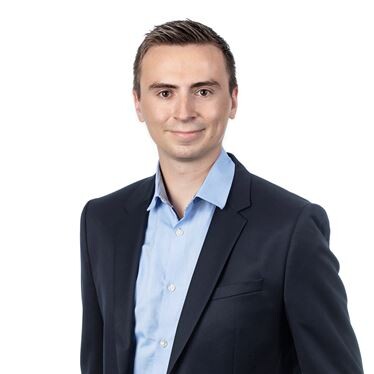
Gil Helbling
Gil Helbling stands at the interface between technology and operational implementation. As Head of Digitalisation at Enzler, he drives the company’s digital development forward. In doing so, he combines business acumen with a deep understanding of efficient processes.
network of experts: hygieneforum.ch/hygiene-experten/
Digital tools have a short half-life. Isn’t there a risk that staff will have to constantly adapt to new tools and that training will take up a lot of time?
That is indeed a dilemma. We ourselves have experienced a situation where a tool we liked to use was suddenly no longer being developed. As a result, we had to reprogram these applications and retrain the teams. Either way, introducing a digital cleaning pass involves a certain amount of effort. At the same time, the pass ensures more consistent quality, provides quick proof of the services performed – and significantly reduces complaints. All of this saves time.
How should a company go about choosing a tool? Do Swiss applications have advantages over products from abroad?
Not every tool is suitable for every cleaning situation. As the country of origin of IT, Switzerland has one particular advantage: data security. Storing floor plans on servers in Switzerland can be important for certain customers.
What does Enzler offer with DigiLab?
We see ourselves as a service provider that offers insight into how digitalisation can be used in cleaning. The strength of DigiLab is that we demonstrate various tools independently of specific providers. On request, we can also visit our customers who use these tools and arrange discussions with the users. We then provide advice on which tool is best suited to which application. On request, we can also take care of training and implementation. However, the customer must purchase the software themselves, as we do not program our own software. This service goes far beyond what the seller of a single IT tool offers.
Have any competitors approached you yet?
Every now and then. We work together informally and share our experiences with different tools. Of course, the cleaning market is highly competitive. But when you exchange ideas with colleagues, both sides benefit.
Interview published in: rationell reinigen (November 2025; Holzmann Medien GmbH & Co.KG)
Anzahl Likes:0
Share post
Knowledge articles from this category


Our platform partners share their knowledge and high-quality products on Hygieneforum.ch - we introduce our platform partners.
To the partnerships
Emergency
Hygiene emergency
Emergency
Hygiene emergency