

16.02.26
Arsenic in historical collections: Safe handling for libraries and museums
Historical collections harbour an invisible danger that affects many cultural institutions: arsenic compounds in books, documents and natural history specimens. For centuries, arsenic was used as a preservative and pigment component – a practice that continued well into the 20th century.

Libraries and museums face the challenge of protecting their valuable historical collections without endangering staff and visitors. The professional identification of contaminated objects requires specific knowledge of analysis methods and protective measures. Arsenic dust can accumulate in storage rooms and exhibition spaces over many years without being noticed.
The arsenic issue clearly shows how heritage preservation and health protection are inextricably linked. Those responsible must take into account both the historical significance of their collections and current safety requirements. A systematic approach, from risk analysis and appropriate protective measures to professional decontamination, forms the basis for the safe handling of this toxic heritage.
Arsenic in libraries and museums: origin and risks
“Schweinfurt green” – this arsenic-based colour, which was widely used in the 19th century, can still be found today in the historical book collections of numerous libraries and archives. The use of arsenic-based pigments was increasingly restricted in the late 19th century, but existing pigments continued to be used for a long time afterwards.
Arsenic contamination is not limited to green bindings. Yellow to orange pigments such as auripigment and reddish tones such as realgar also contain significant amounts of arsenic. Ethnological museums specifically used arsenic-containing substances as preservatives to protect valuable cultural assets from insect infestation and mould growth.
Arsenic can cause both acute and chronic health problems. Short-term exposure leads to irritation of the eyes, respiratory tract and skin. Long-term exposure can result in cardiovascular problems, respiratory diseases and cancer. Based on current knowledge, the contribution to overall arsenic exposure from normal handling of contaminated books is probably low.
These findings put the risk into perspective, but do not negate the need for appropriate protective measures. The accumulation of small exposure doses over long periods of time requires careful risk assessment, especially for occupationally exposed individuals.
Detection and analysis of arsenic contamination
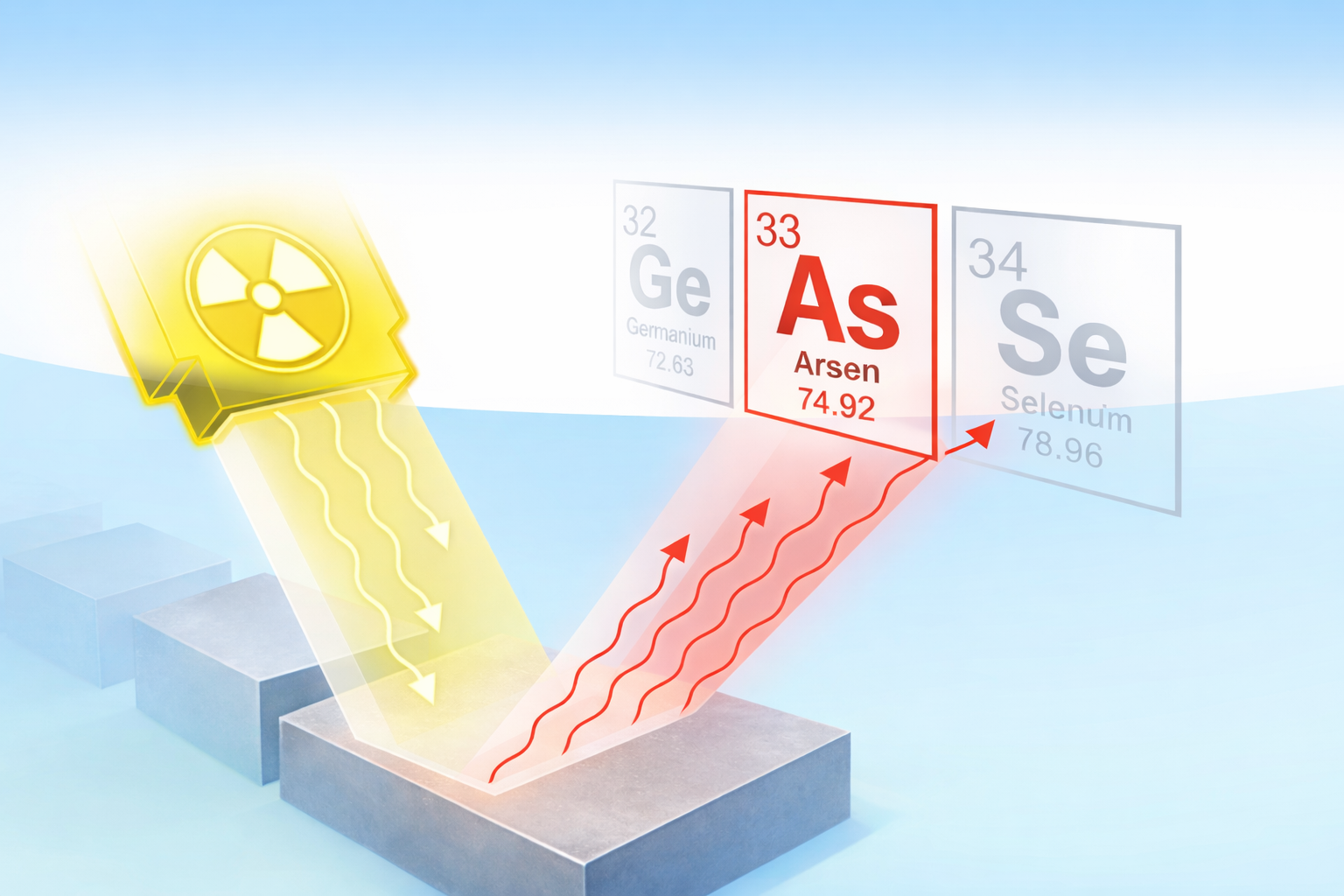
Arsenic compounds cannot be identified with the naked eye, which is why specialised analytical methods are essential. X-ray fluorescence analysis (XRF) has established itself as the standard method because it is non-destructive and can be used directly on site. The method irradiates materials with X-rays and generates characteristic spectra that detect specific elements.
However, it is crucial to note that detecting arsenic on an object does not answer the question of the risk to humans. Assessing the exposure risk requires additional air and dust analyses.
Safe arsenic decontamination and prevention
Since historical objects cannot be replaced, effective protection concepts focus on technical, organisational and personal protective measures.
The first step is organisational: suspected areas are defined as work zones, unnecessary movement of people is reduced, and contaminated materials are separated where possible. The aim is to prevent dust from being “spread” throughout the building. Appropriate PPE must also be selected for decontamination.
This is followed by the actual removal of loose deposits: HEPA extraction (or dust class H/HEPA-compliant) with suitable attachments to prevent particles from returning to the room air.
For the third step, wet cleaning of non-porous surfaces (e.g. metal shelves, coated table tops, lacquered furniture surfaces), avoid using “too much” water. Instead, it is best to wipe in small sections using minimally damp cloths with deionised water and a mild, non-ionic surfactant to better wet and bind particles. In practical terms, this means: Only lightly dampen cloths, change them frequently (to avoid cross-contamination) and avoid visible wetness.
Caution should be exercised with porous, sensitive or historically coated surfaces: in such cases, HEPA extraction and very selective, barely damp wiping (with preliminary testing) is usually the safer option.
Important: Objects containing arsenic must be stored in well-sealed display cases, under tight-fitting covers or in other suitable protective containers. Collectibles (books, bindings, textiles, specimens) are not cleaned “like furniture”. Wet treatments on contaminated textiles and objects are invasive, produce contaminated wash water and should be carried out by restorers with the appropriate infrastructure.
In some contexts, sodium hypochlorite (bleach solution) is discussed as a disinfectant/decontaminant for surfaces that are not relevant to collections. However, its use in a collection environment must be critically examined: liquid disinfectants can damage materials or cause undesirable chemical effects. Furthermore, although hypochlorite can oxidise arsenic, it does not remove it. In order to actually reduce arsenic contamination, the contamination must then be mechanically removed.
further information
Classification in Switzerland: https://www.chemsuisse.ch/files/78/DE-Diverse-Merkblaetter/974/Merkblatt-D14.pdf
Practical guidelines and technical standards for libraries: https://www.bibliotheksverband.de/sites/default/files/2024-11/Arsen-Handreichung%20des%20dbv_2.aktualisierte%20und%20erweiterte%20Fassung%20vom%2007.11.2024.pdf
Scientific basis for risk assessment and all-clear signals in everyday library life: https://www.degruyterbrill.com/document/doi/10.1515/bd-2024-0041/html?lang=en
Expertise in the field of museums, conservation and restoration.: https://www.museumsbund.de/wp-content/uploads/2018/04/tagung-schadstoffe-beitraege-gesamt-16042018.pdf
Medical/toxicological verification of the described symptoms of the disease: https://toxikologie.de/wp-content/uploads/2024/04/2024-Arsenbelastete_historische_Buecher_HP.pdf
BAG Factsheet Arsen: https://www.bag.admin.ch/dam/de/sd-web/lyUeGIyGCnyq/factsheet-arsen.pdf
Anzahl Likes:0
Share post
Knowledge articles from this category


Our platform partners share their knowledge and high-quality products on Hygieneforum.ch - we introduce our platform partners.
To the partnerships
Emergency
Hygiene emergency
Emergency
Hygiene emergency