

05.06.26
Interview with Pericin Häfliger: Cleaning as a management issue – between impact, learning and benchmarking
Clean rooms are no accident, but the result of professional management. By taking a strategic approach to cleaning and combining it with benchmarking, organisations can lay the foundations for quality, cost-effectiveness and organisational development within the healthcare sector.
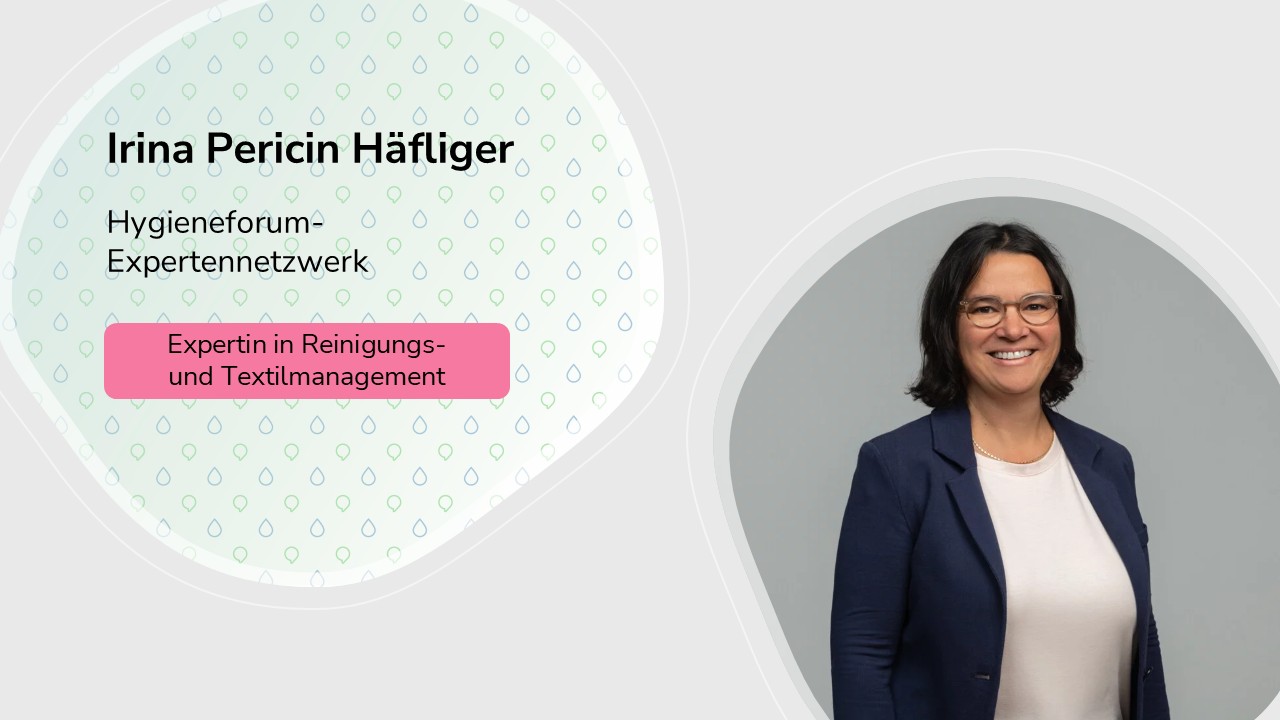
In this interview, we speak to Pericin Häfliger, a lecturer and consultant specialising in cleaning and textile service management. A qualified housekeeping manager with a Master of Science in Organisational Development, she combines practical operational experience from the hotel and social care sectors with applied research and teaching at a university of applied sciences. As the author of a specialist book on cleaning management and scientific director of the cleaning benchmark in the Swiss healthcare sector, she is committed to the professional development and networking of managers in a field that is often underestimated.
From the hospitality industry to university: driven by curiosity
What drives you, Ms Pericin Häfliger?
I am driven by curiosity, a passion for creativity, and a desire to develop practical solutions for everyday life. I also love interacting with people. In teaching, research and consultancy, my aim is therefore not merely to impart knowledge, but first and foremost to empower people to shape their own lives effectively.
It is no coincidence that I have specialised in the management of professional cleaning and textile services. It is about something that seems self-evident in everyday life, yet is of central importance: clean and well-maintained spaces and healthy people. I am deeply convinced that the physical and social environment affects our well-being and behaviour, and that well-maintained surroundings form an important foundation for wellbeing, health and productivity. I am motivated to further develop these services professionally, whilst at the same time empowering and connecting people who bear responsibility in this field.
From hotel to university: Which stages were key moments, and why?
Even as a schoolgirl, I wanted to work in the hotel industry. After completing my degree, I was able to fulfil this ambition by taking up a role as housekeeping manager in St. Moritz. This experience showed me just how demanding and complex the day-to-day management of cleaning and laundry services is in practice, and how much quality and financial success depend on leadership, processes and attitude.
Another important step was my work at the Rodtegg Foundation for People with Physical Disabilities in Lucerne. There, I was able to gain further valuable management experience before joining the predecessor institution of today’s university of applied sciences as an assistant, where I helped to establish the applied research and development programme for the new Facility Management degree course.
At university, I found a place where I could combine in-depth subject knowledge, reflection and practical relevance. A key moment was undoubtedly the decision to apply for the role of lecturer. Whilst preparing for my first lessons, I quickly realised that my predecessors had produced excellent lecture notes, but that there was hardly any specific academic literature on cleaning management. When I realised this, it became clear to me that I would write a book on the subject myself. It was only as I got started that I realised this would be a lengthy and demanding process. Of particular importance to me is the model for cleaning management developed in the process, which is based on the St. Gallen Management Model. I was also delighted to have the opportunity to present this at a conference of the International Federation of Home Economics in Ireland.
Later on, an international online course on teaching and learning in higher education proved to be a defining influence on my commitment to the pedagogical development of teaching.
To this day, I remain fascinated by both teaching and consultancy, as they allow me to engage continuously with theory and practice and to develop new perspectives together with students and clients.
Education and training: skills rather than the mere transfer of knowledge
What content do you cover in your courses, and what do you feel is particularly important to convey to your students?
In my courses, my focus is generally less on simply imparting knowledge and more on raising awareness of the subject and developing skills. This applies to various areas of facility management, in particular cleaning management, textile services and facility management in the healthcare sector, as well as collaborative and social learning within peer groups.
When I focus on cleaning management, it is particularly important to me that students become prepared to engage with cleaning as a relevant management topic. Many start their studies with little awareness or interest in the subject, but as the course progresses, they discover just how complex and impactful this field is: for the users of spaces, for economic efficiency, for the environment, for social issues, and for the people who do the cleaning. Through a case study, students learn to develop a cleaning concept for a specific property. In addition, students develop their own creative ideas for building cleaning, linking cleaning to personal interests or current issues. In doing so, many realise that this topic is not only functional and cost-relevant, but can also be approached in a versatile, design-oriented and enjoyable way. I also place a strong emphasis on cleaning-friendly building design. It is important to me that students are able to consciously design cleaning services from the outset.
You completed your Master of Science in Organisational Development in 2024. How does this further education complement your main areas of work and research?
My professional expertise in cleaning and textile service management forms the basis of my work. At the same time, through my teaching and consultancy work, I have repeatedly found that specialist knowledge alone is not enough. Simply imparting knowledge does not automatically lead to change. It requires an understanding of how organisations function, how people behave within complex systems and in the face of uncertainty, and under what conditions high performance and genuine development become possible.
That is why I wanted to gain a deeper understanding of how I can effectively support students and how insights from specialist counselling can be implemented in a sustainable way. Studying organisational development has expanded my long-standing interest in viable solutions by equipping me with key process and facilitation skills. I am now better able to assess my own impact and adapt it in a more targeted way. This is extremely valuable for my work.
In the cleaning and textile services sector in particular, digitalisation, automation, AI and new requirements regarding hygiene, quality and sustainability are bringing about noticeable changes in day-to-day operations. Anyone wishing to remain future-proof in this sector needs not only technical expertise, but also the ability to adapt organisationally. My consultancy work has changed significantly as a result of my studies: it has shifted towards greater co-creation, where we develop solutions together with the organisation.
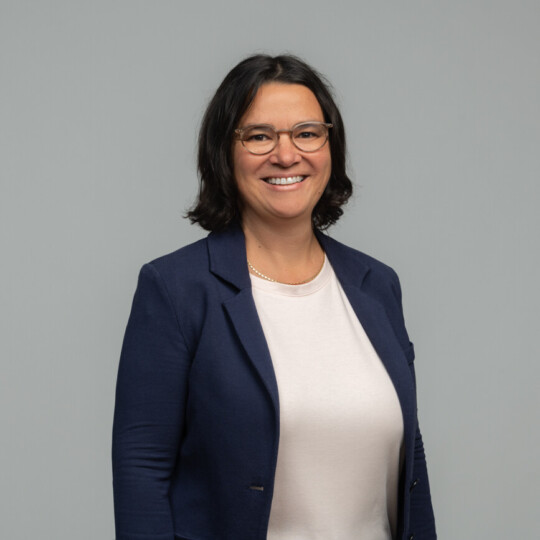
Irina Pericin Häfliger
Education: Housekeeping Manager; Master of Science in Organisational Development
Current role: Lecturer and consultant in cleaning and textile management, and integrated organisational development specialist at the Institute of Facility Management, ZHAW; Research Director of the Cleaning Benchmark
Network of experts: hygieneforum.ch/hygiene-experts/
Specialist area in the Hygiene Forum: Cleaning and textile management
Contact: irina.pericin@zhaw.ch
The Cleaning Benchmark: Compare, Learn, Develop
You publish the cleaning benchmark annually as part of the Benchmarking Community. What exactly is this, and who does this benchmark help?
The Cleaning Benchmark is a tool for managers responsible for cleaning and hygiene management in hospitals, clinics and care facilities in Switzerland. It enables the systematic comparison of cost, staffing and structural indicators at both strategic and operational levels, both within and between organisations, and makes it easier to quantify and communicate the value contribution of cleaning.
Participating organisations enter their data once a year via an online platform. By comparing and analysing this data, they can identify their organisation’s potential for innovation and improvement in a targeted and well-founded manner. The benchmark helps healthcare organisations to evaluate and develop well-founded development measures. At the same time, it strengthens their internal case, for example when it comes to staffing, infrastructure requirements or strategic decisions.
In my view, one of the programme’s key features is the community. The professional exchange among participants adds significant value. In a confidential setting, participants learn from one another, discuss best practices and gain inspiration for their own leadership and development work.
The value of the cleaning benchmark therefore stems from scientifically sound analyses, structured comparisons of performance and structural data, and the practical exchange of experiences.
The cleaning benchmark is now organised as a separate entity, distinct from the catering sector, and has its own advisory board. What prompted this change, and what improvements will it bring?
Organisational autonomy reflects professional development. Research into the monitoring and further development of benchmarks in the healthcare sector has shown that cleaning and catering operate according to different professional principles, key performance indicators and development priorities. Although these two areas are often closely linked in organisational terms, in practice they are increasingly managed by separate teams of specialists. It therefore makes sense to define the individual benchmarks more clearly.
By establishing the cleaning benchmark independently, we are able to develop the technical aspects in a more targeted manner. The new advisory board plays a particularly important role in this regard. It brings together a wide range of expertise from the Swiss hospital, clinic and care home sectors, thereby enhancing the quality, relevance and practical applicability of the benchmark.
This makes it possible to align the research questions even more closely with the current challenges facing cleaning in the healthcare sector.
The benchmark has been in existence since 2015. Have any trends emerged over the years? If so, what are they?
It is clear that the need for comparison, classification and mutual learning has remained consistently high over the years. For many organisations, benchmarking and benchlearning are key components in better assessing their own performance and developing it in a targeted manner.
Some of the topics have changed. The benchmark is constantly evolving and addresses current issues raised by the community, such as digitalisation, sustainability and the processing of cleaning textiles. Last year, we also collected key performance indicators that cannot be directly controlled by those responsible for cleaning, but which nevertheless influence the cleaning workload. One example of this is the number of bed moves per inpatient case, which in some facilities has a significant impact on operational costs. This year, we will also be recording and comparing starting salaries for cleaning staff for the first time.
Who can take part in the benchmark and what is the registration process?
The benchmark is organised as a community. Anyone responsible for cleaning a hospital, rehabilitation clinic, psychiatric ward, care home or nursing home is welcome to take part. You can register simply by filling in a form available on the website.
Anzahl Likes:0
Share post
Knowledge articles from this category


Our platform partners share their knowledge and high-quality products on Hygieneforum.ch - we introduce our platform partners.
To the partnerships
Emergency
Hygiene emergency
Emergency
Hygiene emergency